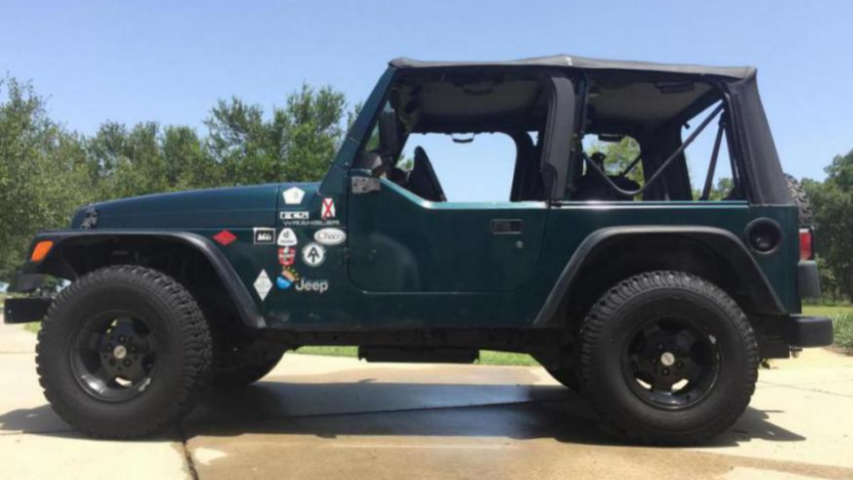
If you want to put larger tires on a stock Jeep Wrangler TJ without adding a lift, 31 inches is the number to know. It is the largest tire size that generally fits within the TJ's factory suspension envelope, which is why 31x10.50R15 has been such a common upgrade for decades.
That was one of the first upgrades I made to my own TJ. My first set was a set of BFGoodrich All-Terrain T/A KO2s in 31x10.50R15, and the difference was immediately noticeable. The Jeep looked better, gained useful clearance, and felt more at home off-road without giving up the simplicity and road manners of the stock suspension. Of all the upgrades I have made to that Jeep, moving to 31s remains one of my favorites.
It also turned out not to be a one-time experiment. I am now on my fourth set of 31-inch tires. For a TJ still running 15-inch wheels, the size hits an unusually good balance. It adds useful ground clearance, plenty of sidewall, and a more capable stance without immediately requiring a suspension lift or the chain of supporting modifications that often comes with moving into 32- and 33-inch tires.
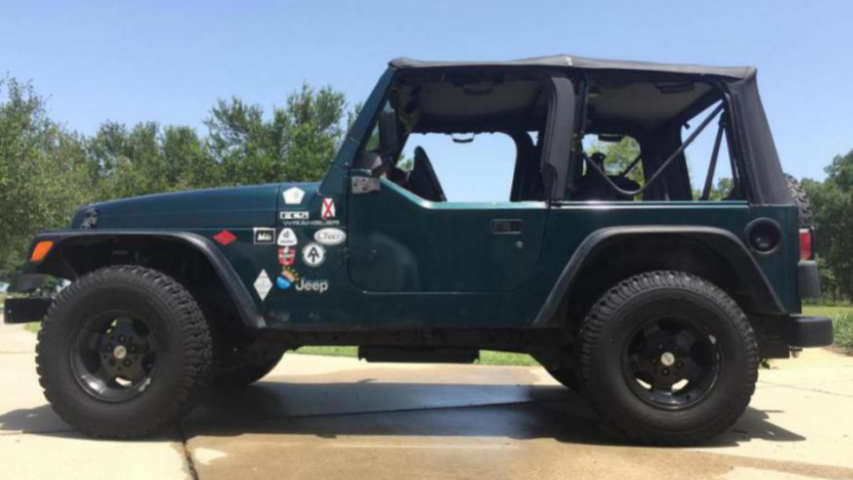
31 Inches Is the Practical Limit on Stock TJ Suspension
There is plenty of anecdotal evidence from decades of TJ ownership, but there is also solid fitment guidance behind the conventional wisdom.
Quadratec currently lists 31 inches as the size a YJ or TJ can usually accommodate on factory suspension without issues. That makes 31 inches a useful dividing line. Up to this point, you are generally still working within the factory suspension envelope. Beyond it, clearance becomes increasingly dependent on lift height, bump stops, wheel backspacing, and how much suspension articulation you expect to use.
The TJ itself also provides some useful context. Later SE, X, and Sport models used 15x7 wheels as standard equipment, with 15x8 wheels available on some configurations. Factory tire sizes ranged from smaller 215/75R15 and 225/75R15 tires to an optional 30x9.50R15. The Rubicon went even farther, leaving the factory on LT245/75R16 tires, essentially a 31-inch-class tire.
In other words, a 31-inch tire is not radically outside the dimensions Jeep engineered into the TJ platform.
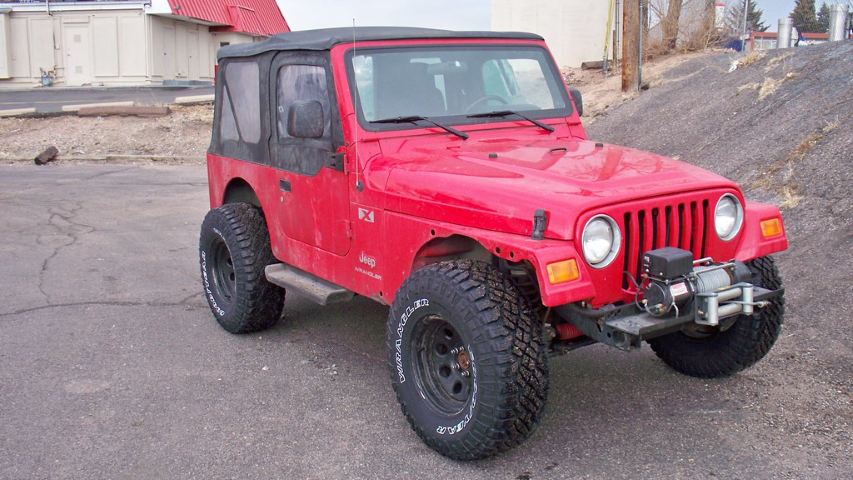
Why 31x10.50R15 Works So Well
The 31x10.50R15 is particularly well suited to the traditional 15-inch TJ wheel.
As one current example, General Tire specifies an approved wheel-width range of 7 to 9 inches for its 31x10.50R15 Grabber A/TX. That encompasses both common 15x7 and 15x8 TJ wheel widths. Always check the specifications for the exact tire you are buying, but the size itself is a natural match for the TJ's traditional wheel dimensions.
The 15-inch wheel also leaves a lot of sidewall. A nominal 31-inch tire wrapped around a 15-inch wheel has substantially more tire between the wheel and the trail than a modern low-profile setup.
That matters off-road.
More sidewall gives the tire more room to conform to rocks and irregular terrain when pressures are appropriately reduced. It also helps isolate the wheel from sharp impacts and contributes to the soft, compliant trail behavior that works so well on a relatively light, short-wheelbase TJ.
There is a reason the 31x10.50R15 became such a familiar Jeep tire size.
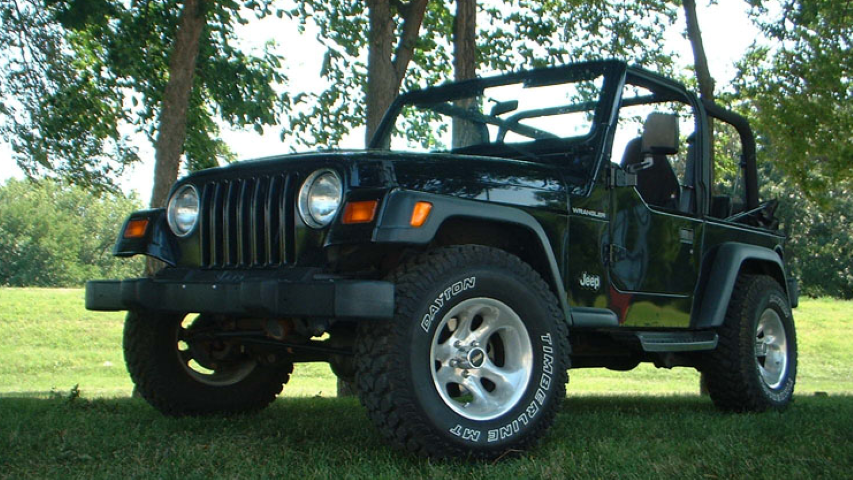
You Gain Ground Clearance Where It Actually Matters
One of the most useful benefits of moving to a 31 is additional ground clearance, but it is worth understanding exactly how much you gain.
Installing a tire that is three inches larger in diameter does not give you three inches of additional clearance underneath the axles.
It gives you roughly half that amount.
The axle sits at the center of the tire, so moving from an approximately 28-inch tire to a 31-inch tire can provide about 1.5 inches of additional clearance at the differential. Moving from a factory 30-inch tire to a 31 gives you closer to half an inch.
That may not sound dramatic, but differential clearance is valuable because a suspension lift alone does not raise the axle housing farther away from the trail. Larger tires do.
On a TJ picking its way through rocks and ruts, an extra inch or so beneath the differential can be considerably more useful than the number suggests.
No Lift Required, but Check Full-Lock Clearance
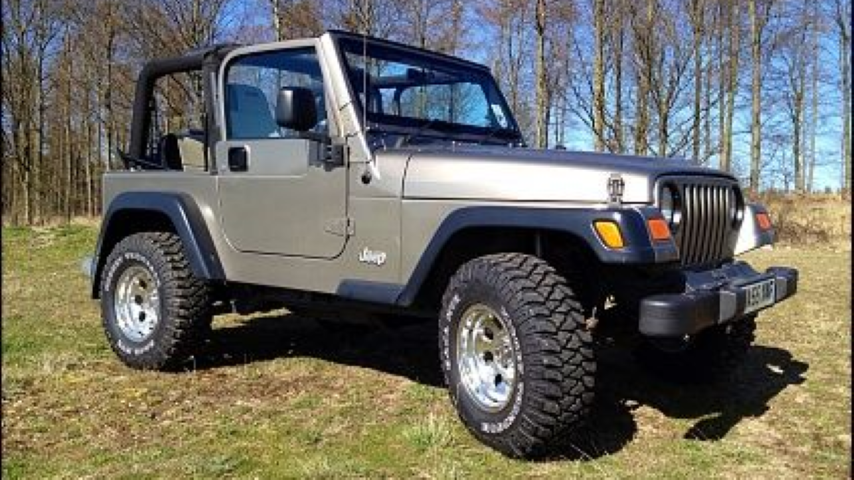
One of the biggest advantages of a 31-inch tire is that it generally does not require a suspension lift on a TJ.
That does not mean every 31x10.50R15 on every TJ is guaranteed to clear absolutely everything.
Wheel width and, particularly, backspacing affect where the tire sits relative to the suspension. Some TJ owners running 31x10.50 tires on factory-style wheels encounter light contact with the control arms at full steering lock.
There is also variation between tire manufacturers. “31 inches” is the nominal size printed on the sidewall, not a promise that every manufacturer's tire has precisely the same mounted diameter or section width.
Suspension age matters, too. A TJ sitting on 20-year-old springs may not have exactly the same clearance it had when it left Toledo.
So the useful rule is not that a 31 can never rub. It is that 31 inches is the largest tire size that normally fits within the stock TJ suspension envelope without requiring a lift.
That is the important distinction.
It Keeps the TJ's Gearing Reasonable
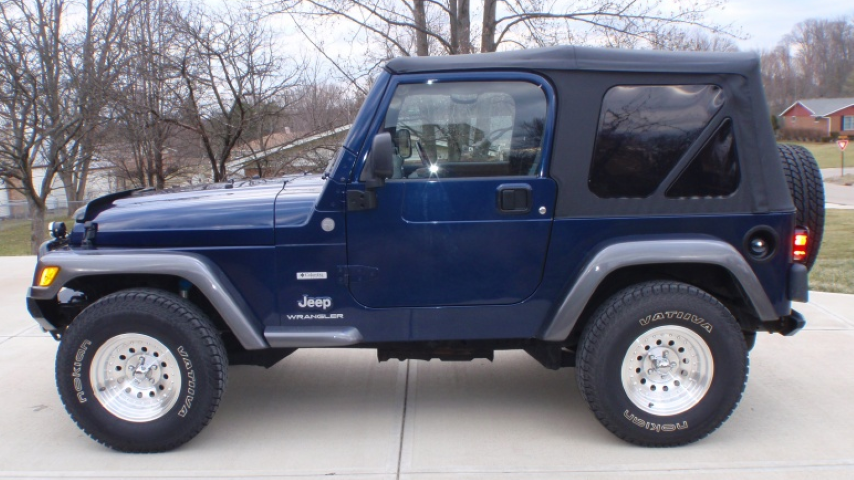
Every increase in tire diameter effectively makes the Jeep's overall gearing taller.
The engine now has to turn a larger tire for every revolution of the axle. That can reduce acceleration, make the transmission work harder to hold higher gears, and reduce some of the mechanical advantage available at low speed.
With 31s, the change is usually modest enough to live with.
That becomes increasingly important on a TJ because axle ratios varied significantly by engine, transmission, and trim. Six-cylinder TJs could be equipped with relatively tall 3.07 gearing, while other models used 3.73, 4.10, or similar ratios.
A 31-inch tire can still be noticeable on a 3.07-geared Jeep, particularly if the previous tire was in the 27- or 28-inch range. But it generally avoids the stronger pressure to regear that comes with substantially larger and heavier tire packages.
This is part of what makes the 31 such a good stock-TJ compromise. You gain useful tire size without immediately turning the upgrade into a drivetrain project.
Remember the Speedometer
Changing tire diameter also changes how far the Jeep travels for each tire revolution.
If your TJ originally came with a significantly smaller tire, moving to a 31 can cause the speedometer and odometer to read incorrectly.
The good news is that this is relatively straightforward on many TJs. Models using a conventional transfer-case speedometer gear can be corrected by matching the driven gear to the tire diameter and axle ratio.
This is one of those small details that separates simply mounting larger tires from properly setting up the Jeep afterward.
The Tire Matters More Than the Number
The discussion around 31-inch tires often gets reduced to “31s have better traction.”
That is only partly true.
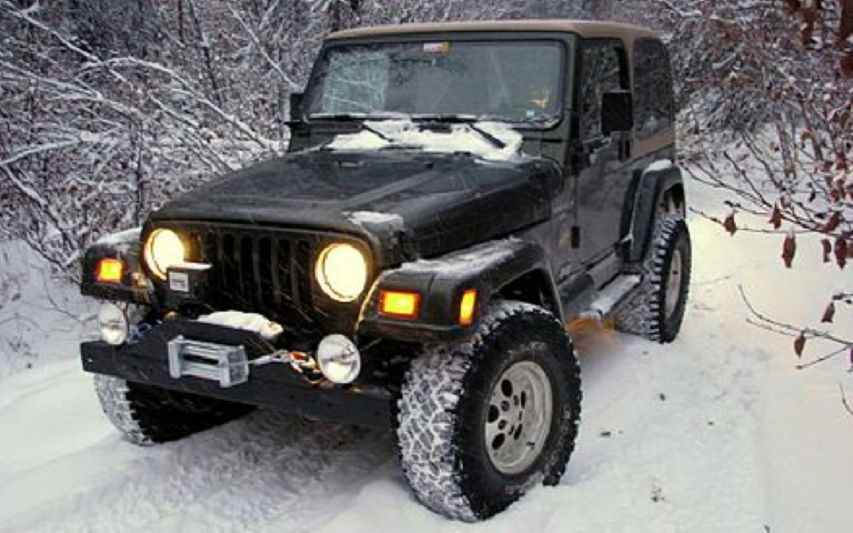
A larger tire gives you a larger potential contact patch and more ground clearance, but traction ultimately depends heavily on the tire itself.
An aggressive mud-terrain, a balanced all-terrain, and a highway-oriented tire can all measure 31 inches and behave very differently in mud, snow, wet pavement, loose rock, and sand.
Construction matters as well. Sidewall strength, tread compound, tread depth, load range, carcass design, and the pressure you run all affect how the tire performs.
A 31-inch tire is not automatically more durable than a 30 simply because it is larger.
The advantage is that 31x10.50R15 remains a legitimate off-road tire size with serious options available. That continued manufacturer support matters for owners keeping older TJs on traditional 15-inch wheels.
It Looks Right on a TJ
There is also the less technical reason.
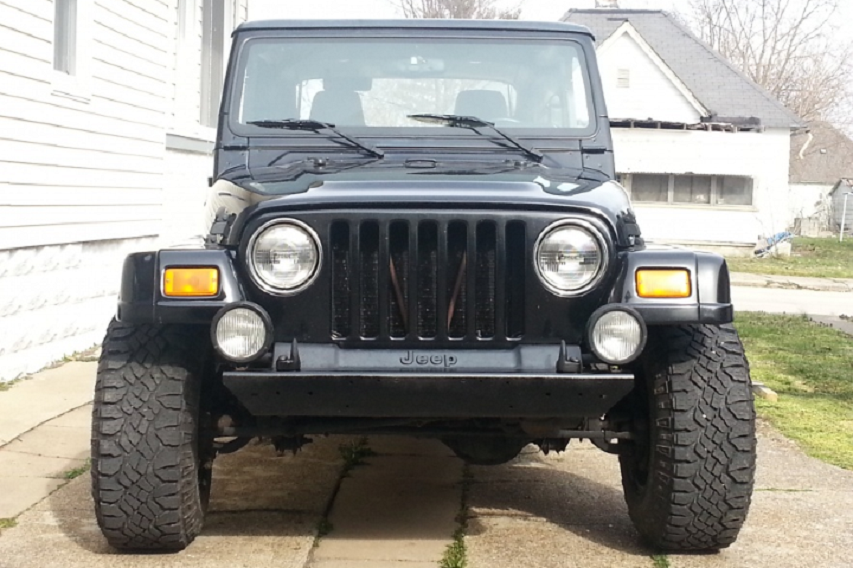
A TJ simply looks good on 31s.
The larger tire fills the wheel opening without overwhelming the body, and it gives the Jeep a more purposeful stance while retaining the compact proportions that distinguish a TJ from later Wranglers.
A stock TJ on small street tires can look slightly under-tired. A TJ on 31s looks like a TJ.
Move much larger, and the vehicle begins asking for suspension height and supporting modifications to restore the proportions. A 31 gets you much of the visual improvement without starting that process.
The Real Advantage: 31s Do Not Start a Build
This may be the best argument for 31-inch tires on a stock TJ.
Jeep modifications have a habit of creating other Jeep modifications.
Install sufficiently larger tires, and you need clearance. Add a suspension lift, and driveline angles can change. Larger and heavier tires affect gearing, braking, steering, axle loads, spare-tire mounting, and other components. At some point, what began as a tire purchase becomes a build.
There is nothing wrong with that. Building a TJ on 33s or larger tires can produce an extremely capable Jeep.
But not every TJ needs to become that Jeep.
For someone who wants to keep the factory suspension, retain good road manners, gain useful off-road capability, and avoid changing half the vehicle to accommodate the tires, 31x10.50R15 remains one of the smartest combinations available.
It gives you more axle clearance, more sidewall, more tire on the trail, and the classic TJ stance, while remaining close enough to the Jeep's original design that the rest of the vehicle can largely remain what Jeep intended.
Jeep Field Guide may earn a commission from qualifying purchases when affiliate links are present. Recommendations are selected editorially, not because a merchant pays for placement.