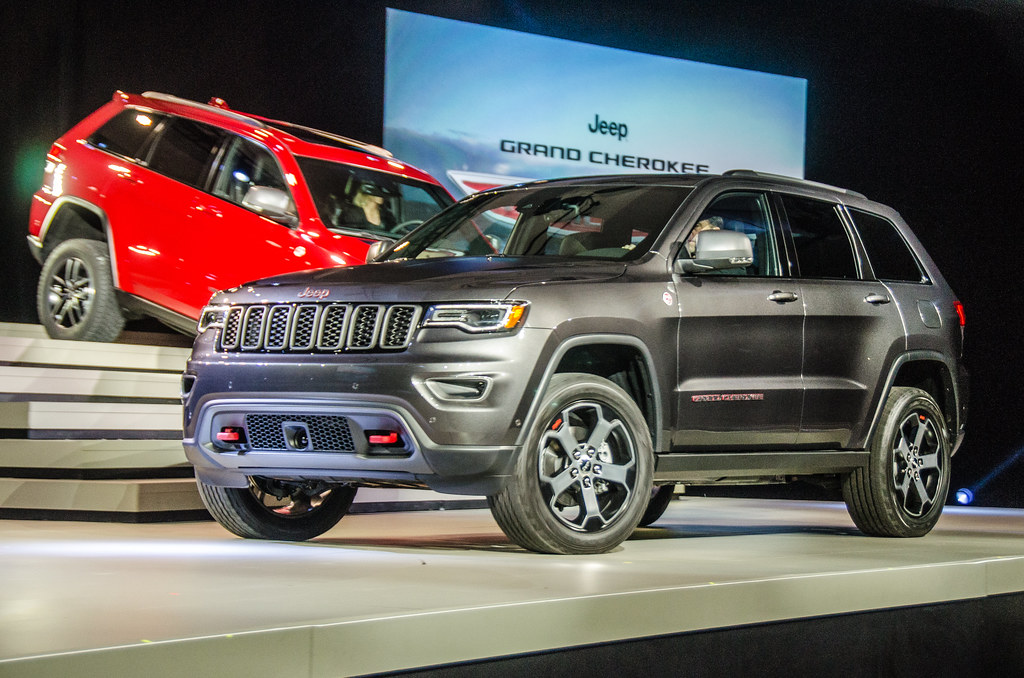
After 19 years of owning TJs, I finally decided I wanted something that was still unmistakably a Jeep but better suited to long highway trips. After weeks of searching, I found a five-year-old Grand Cherokee WK2 with 51,000 miles and bought it. It turned out to be an excellent decision, and one I have never regretted.
Buying a used Jeep like that creates two lists almost immediately: the things you want to change and the things you need to understand.
Do the second list first.
A used Grand Cherokee may look great, drive perfectly, and come with a clean history, but you are still inheriting tens of thousands of miles that happened before you owned it. Some of that history may be documented. Some may not be. Before adding tires, lighting, racks, recovery gear, or other upgrades, it is worth establishing exactly what condition the Jeep is in and what maintenance has actually been done.
That is what a maintenance baseline does.
It does not mean replacing every fluid, belt, filter, and wear item simply because you do not have a receipt for it. It means figuring out what is known good, known due, unknown, and worth watching.
Once you have those four categories, the Jeep stops being a mechanical mystery. Future maintenance becomes much easier because you are working from your own records instead of trying to reconstruct the previous owner's habits.
Start With the VIN, Not the Parts Store
Before buying anything, establish exactly what Jeep you own.
That sounds obvious, but the Grand Cherokee WK2 was produced with multiple engines, transmissions, four-wheel-drive systems, axle configurations, suspension systems, towing packages, and wheel-and-tire combinations. The service requirements for one WK2 should not automatically be applied to another.
Start with the VIN.
Use it to confirm the vehicle's basic configuration and check for any unrepaired safety recalls associated with that specific Jeep.
Then gather whatever documentation came with the vehicle:
- Dealer service records
- Independent shop invoices
- Oil-change stickers
- Tire receipts
- Battery receipts
- Previous inspection reports
- Owner's manual
- Notes from the seller
If dealership or online service history is available, add that information as well.
The objective is not to create a scrapbook. You are trying to answer practical questions: When was the coolant changed? Has the transfer case been serviced? How old is the battery? Are those tires two years old or eight? Were the spark plugs actually replaced, or did someone simply say they were?
A receipt is evidence. A verbal assurance is useful information, but it is not the same thing.
Get the Correct Maintenance Schedule
Once you know the model year and configuration, get the owner's manual and maintenance schedule for that Jeep.
This matters because there is no single universal "WK2 maintenance schedule."
Different engines, drivetrains, model years, and usage patterns can have different requirements. Off-road use and frequent towing can also change when certain components should be inspected or serviced.
That is much more useful than an internet post that says, "Change every fluid at 60,000 miles."
Use the schedule for your model year, engine, drivetrain, and usage as the reference point.
Divide Everything Into Four Categories
A simple way to build the baseline is to classify each major maintenance item into one of four buckets:
Known good
You have credible evidence the service was performed recently, and inspection shows no reason for concern.
Known due
The service interval, mileage, age, or inspection clearly indicates that it needs attention.
Unknown
There is no reliable history, and inspection alone cannot establish when the service was last performed.
Watch
The component is currently serviceable but shows something worth monitoring, such as minor seepage, uneven tire wear, an aging battery, or a suspension bushing beginning to crack.
This prevents the two common extremes with a newly purchased used vehicle.
The first is assuming everything is fine because the Jeep drives well.
The second is replacing everything because you do not know when it was last replaced.
Neither is particularly efficient.
Start With an Inspection Before Resetting the Baseline
Before changing fluids or cleaning the engine bay, inspect the Jeep in the condition you bought it.
You want to see the evidence before you erase it.
Start with the engine compartment. Look for oil residue, coolant staining, damaged wiring, cracked or swollen hoses, loose connectors, missing fasteners, and signs of previous repairs.
Then get underneath the Jeep.
Look around:
- Engine and oil pan
- Transmission
- Transfer case
- Front and rear differentials
- CV boots
- Driveshafts
- Steering components
- Control arms and bushings
- Shocks and struts
- Brake hoses
- Exhaust system
- Skid plates and underbody
A component does not need to be completely dry to be serviceable. Older vehicles develop stains and minor seepage. What matters is distinguishing an old stain from an active leak and documenting what you see so you can determine whether it changes.
One useful trick is to photograph anything questionable.
Clean the area afterward and check it again after several hundred miles. A photograph gives you something objective to compare against.
Do a Baseline OBD Scan Even if the Check-Engine Light Is Off
An inexpensive scan tool can tell you things the dashboard cannot.
At minimum, record:
- Stored diagnostic trouble codes
- Pending codes
- Permanent codes, if supported
- Readiness-monitor status
Do not immediately clear everything.
Pending codes can identify an issue that has occurred but has not yet met the conditions required to illuminate the check-engine light.
Readiness monitors can also provide useful context. If several show "not ready," the battery may have recently been disconnected or the diagnostic system may have been reset.
That does not prove anyone was hiding a problem, but it is worth recording and checking again after some normal driving.
The scan is not a diagnosis. It is simply another snapshot of the vehicle on the day you acquired it.
Save the results.
Establish an Engine-Oil Starting Point
If you have a credible receipt showing a recent oil change with the correct oil and filter, there is no benefit in throwing perfectly good oil away just to create a round number in your notebook.
If the history is unknown, an oil and filter change is one of the easiest baseline services to justify.
It gives you an exact date, mileage, oil specification, and filter from which every future oil service can be calculated.
Before draining the old oil, check the level.
An engine arriving a quart low tells you something that disappears once you refill it.
Likewise, pay attention to obvious coolant contamination, metallic material, unusual odors, or anything else that warrants further investigation. Do not try to diagnose engine health from oil color alone. Used engine oil becomes dark in normal service.
Record the mileage, oil specification, quantity, and filter used.
Now that maintenance item is no longer "unknown."
Treat Coolant History Seriously
Coolant is a good example of why maintenance history matters more than appearance.
Color alone is not a reliable way to identify coolant chemistry, and mixing incompatible coolants is a poor way to establish a baseline.
First determine what coolant specification your exact WK2 requires.
Then determine whether there is credible evidence that it has been serviced correctly.
If the history is unknown and the vehicle has reached the appropriate time or mileage interval, a proper coolant service can be worthwhile because it gives you a known starting point.
Notice the word proper.
This is not an invitation to top the system off with whatever jug says "universal" on the front. Verify the specification for the Jeep.
Also inspect the cooling system itself for dried residue around fittings, the radiator, reservoir, hoses, thermostat area, and water-pump area.
A cooling system that is slowly losing coolant deserves attention regardless of what the maintenance schedule says.
Do Not Lump the Driveline Fluids Together
This is one place where generic used-car advice becomes particularly unhelpful.
"Change the drivetrain fluids" sounds simple until you realize that the vehicle may have a transmission, transfer case, front differential, rear differential, and drivetrain components whose fluid requirements depend on the equipment installed.
Treat each one separately.
For each component ask:
- What exactly is installed in this Jeep?
- What fluid specification does Jeep call for?
- What does the maintenance schedule say about inspection or replacement?
- Is there credible evidence that the service has already been performed?
- Has the Jeep been used in a way that changes the recommended service?
That last question matters.
Off-road driving and frequent towing place very different demands on driveline components than routine highway use.
That is why "the internet says change it at X miles" is not a maintenance plan.
Usage matters.
Check the Brakes as a System
Do not reduce a brake inspection to measuring the remaining pad material.
Check:
- Front and rear pad thickness
- Rotor condition
- Uneven wear between sides
- Brake hoses
- Parking-brake operation
- Fluid level
- Fluid condition
- Evidence of leaks
Uneven pad wear can sometimes tell you more than total pad thickness. One nearly new pad and one heavily worn pad on the same axle deserves an explanation.
Also look at the maintenance history for brake fluid rather than assuming that full fluid means good fluid.
The reservoir is part of the inspection, not the entire inspection.
Read the Tires, Not Just the Tread Depth
Used-vehicle tires can reveal a surprising amount about the vehicle.
Check all four tires for:
- Matching size
- Matching model where practical
- Tread depth
- Inside-versus-outside wear
- Cupping or feathering
- Sidewall damage
- Repairs
- Proper pressure
- Manufacturing date
Pay particular attention to the inside edges. A tire can look healthy from outside the Jeep while being badly worn where you cannot easily see it.
Then read the DOT date code.
The final four digits of the Tire Identification Number indicate the week and year of manufacture. For example, "2322" means the tire was manufactured during the 23rd week of 2022.
Check the spare, too.
The spare is often the oldest tire on the Jeep precisely because nobody has worn it out.
A beautiful full-depth spare that is a decade old is not the same thing as a new tire.
Inspect the Suspension and Steering Before Buying Suspension Parts
This is particularly important if modifications are on your wish list.
Before deciding the Jeep needs different springs, shocks, wheels, or tires, understand what condition the existing suspension and steering are in.
Check:
- Ball joints
- Tie-rod ends
- Control-arm bushings
- CV boots and joints
- Wheel bearings
- Shocks and struts
- Sway-bar links and bushings
- Alignment-related tire wear
Listen for clunks over bumps and during low-speed steering.
Pay attention to wandering, vibration, steering-wheel position, and whether the Jeep consistently pulls in one direction.
A suspension modification should not be used to disguise worn factory components.
Fix the baseline first. Modify the known-good vehicle afterward.
Quadra-Lift Deserves Its Own Check
If the Grand Cherokee is equipped with Quadra-Lift air suspension, add it to the baseline.
Cycle the suspension through its available ride heights and verify that the vehicle raises and lowers normally.
After it has been parked for an extended period, look at the stance before opening a door or starting the Jeep. One corner sitting noticeably lower than it was when parked can be useful information.
Pay attention to how frequently or how long the compressor runs.
None of those observations alone diagnoses a failed air spring, valve block, compressor, or line. What they do is establish how the system behaves today.
Write that down.
If the behavior changes six months from now, you have something to compare it against.
Check the Battery's Age, Not Just Whether the Jeep Starts
A battery can start the Jeep perfectly today and still be nearing the end of its useful life.
Find the date code or installation date if possible.
Inspect the terminals and cables for corrosion, looseness, or previous repair.
If you have access to a battery tester, record the result. Otherwise, consider having the battery and charging system tested, particularly if the battery's age is unknown.
Modern vehicles depend heavily on stable electrical voltage. A marginal battery can create symptoms that appear far more complicated than "old battery."
Knowing its age eliminates another unknown.
Filters Are Cheap, but Inspect Them First
Engine and cabin air filters are easy baseline items.
Pull them out.
If they are clean and obviously recent, there is little reason to replace them simply because you bought the Jeep yesterday.
If the engine air filter is packed with dirt, debris, or evidence of rodent activity, you have learned something useful about both the filter and possibly the Jeep's previous environment.
The cabin filter can tell a similar story.
Again, the principle is inspection before replacement.
Look for Evidence of Previous Modifications
One of the most useful inspections on a used Jeep is looking for what the previous owner removed.
Aftermarket equipment often leaves evidence:
- Extra holes
- Non-factory wiring
- Abandoned connectors
- Fuse taps
- Spliced harnesses
- Auxiliary-switch wiring
- Trailer-brake-controller wiring
- Removed lighting
- Aftermarket stereo wiring
- Modified suspension components
- Unused brackets
None of those things automatically indicates a problem.
But abandoned wiring deserves particular attention.
Trace unfamiliar power wires far enough to determine whether they are still energized and properly fused. A mystery wire running directly to the battery should not remain a mystery indefinitely.
Unknown Does Not Automatically Mean Bad
This may be the most important rule when establishing the baseline.
An absent receipt does not prove that a service was never performed.
If you buy a 70,000-mile Jeep with no spark-plug receipt, that does not mean the plugs have 70,000 miles on them. It means their history is unknown.
That distinction prevents unnecessary work.
For each unknown item, ask whether its present condition can be inspected adequately.
If it can, inspect it.
If the component has an important time or mileage interval that cannot be verified through inspection, preventive replacement or service may be the sensible way to create a known starting point.
The more expensive and invasive the job, the more valuable that distinction becomes.
Do not turn uncertainty into a diagnosis.
Build the Baseline in Order of Consequence
You do not have to solve every unknown during the first weekend.
Prioritize them.
First priority: safety
- Tires
- Brakes
- Steering
- Suspension
- Lighting
- Open recalls
Second priority: things that can strand or damage the Jeep
- Oil level and service
- Cooling system
- Battery and charging
- Significant fluid leaks
- Belts and hoses
- Driveline-fluid issues
Third priority: routine maintenance
- Filters
- Spark plugs when applicable
- Minor seepage
- Wipers
- Washer system
- Other scheduled services
Fourth priority: modifications
That winch, roof rack, set of wheels, or lift will still be available next month.
Create a One-Page Maintenance Baseline
When you are finished, make the information usable.
A spreadsheet, notebook, maintenance app, or document is fine. The format matters less than consistency.
For each service, record:
- Date
- Mileage
- Work performed
- Parts used
- Fluid specification
- Fluid quantity when relevant
- Observations
- Receipt or part number when useful
Also record the things you did not replace.
For example:
82,416 miles: Front brakes inspected, approximately 7 mm pad remaining, rotors smooth, no action required.
That entry may save you from wondering about the brakes a year later.
Do the same with watch items:
82,416 miles: Light oil staining around differential cover, no active drip. Cleaned and photographed. Recheck next oil change.
Now you have something much more useful than "I think it was already leaking when I bought it."
The Goal Is Not a Perfect Jeep
A maintenance baseline does not mean making every part of a used Grand Cherokee new again.
It means replacing uncertainty with information.
At the end of the process, you should know which services have been performed, which are due, which components need watching, what equipment the Jeep actually has, and where the remaining gaps in its history are.
From that point forward, every mile makes the maintenance history better because it is your history.
And then you can start buying the fun stuff.
There will always be another tire, rack, light, recovery tool, or camping accessory worth considering. Those upgrades are much easier to enjoy when you know the Jeep underneath them is mechanically understood.
The best first modification to a new-to-you WK2 may simply be removing the word unknown from as many important maintenance items as possible.
Jeep Field Guide may earn a commission from qualifying purchases when affiliate links are present. Recommendations are selected editorially, not because a merchant pays for placement.