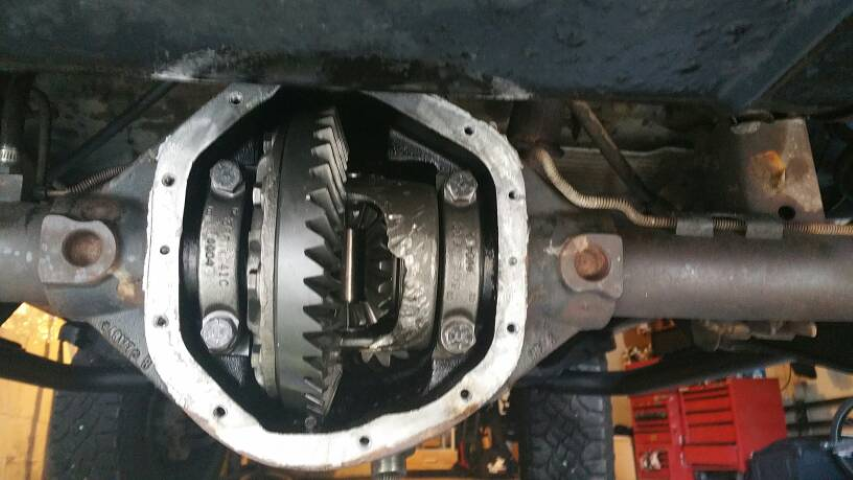
Differential-fluid service looks simple: drain or open the housing, clean up, reseal, and refill. The part that deserves more attention comes before any of that—knowing exactly what axle and equipment you are servicing.
Across Wrangler generations, axles, ratios, lockers, limited-slip equipment, and fluid requirements vary. Modified Jeeps add another layer because an axle may no longer be what the VIN or factory build sheet suggests.
Start with identification
Before buying fluid, determine:
- front or rear axle model
- whether the axle is factory or swapped
- whether it uses a locker or limited-slip system with specific requirements
- the fluid viscosity and specification called for by the applicable service information
- whether towing or severe use changes the recommendation
If the differential cover, axle, or internal equipment has been changed, use the requirements of the installed hardware rather than assuming a stock specification.
Trail use can shorten the conversation
Water crossings deserve special attention. If water enters an axle housing through a vent, seal, or other path, waiting for the normal service interval may not be appropriate.
Milky or contaminated-looking fluid is a reason to investigate. So are metal particles beyond the fine material you might expect to find on a magnetic drain plug during normal wear.
The refill is not the only inspection
While servicing the axle, inspect the housing and cover for leaks or impact damage. Check the vent hose and routing. Look at pinion and axle-seal areas for evidence of seepage.
On a trail-driven Jeep, a differential service is as much an inspection opportunity as a fluid change.
Avoid universal numbers
Capacity, torque, sealant procedure, and fluid specification are exactly the kinds of details that should come from service information for the specific axle and configuration. A generic Wrangler number can be right for one Jeep and wrong for the next.
Use the guide to understand the job; use the correct technical source to execute it.
Jeep Field Guide may earn a commission from qualifying purchases when affiliate links are present. Recommendations are selected editorially, not because a merchant pays for placement.